
Dental Marketing

In-House Dental Discount Plans vs. Insurance: What Patients Actually Choose

September 19, 2026 Aadi 4 min read
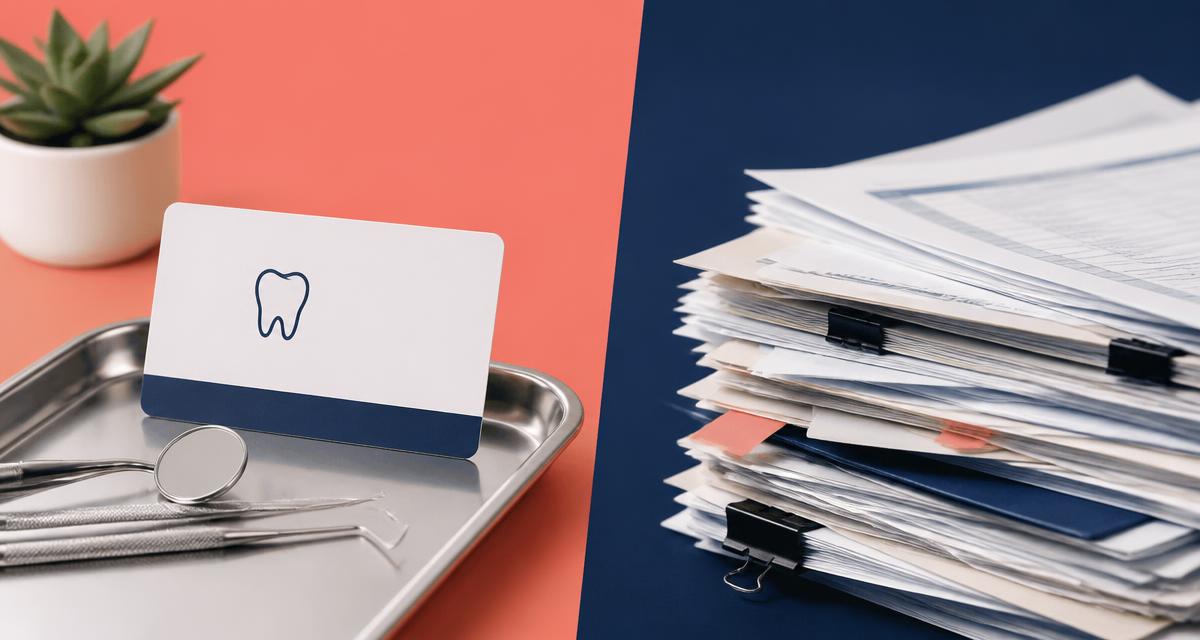
Simple dental membership card on a tray compared to a stack of insurance paperwork

For the roughly one in four American adults without dental insurance, an in-house dental discount plan almost always beats buying an individual insurance policy — lower cost, no waiting periods, no annual maximums, and no claim denials. Practices that understand this comparison can present their plan with total confidence, and patients who understand it say yes far more often.

This article walks through the honest comparison, the objections patients raise, and how to position your in-house plan so it wins.

How in-house dental discount plans work

An in-house dental discount plan — also called a dental membership plan, savings plan, or subscription plan — is a direct agreement between your practice and the patient. The patient pays your practice a monthly or annual fee, receives preventive care included, and gets a set discount (typically 10% to 20%) on everything else. Money flows from the patient straight to you. There is no third party, no claims, and no pre-authorizations.

How individual dental insurance works — and where it fails patients

Individual dental insurance looks familiar but behaves badly for the patients who buy it on their own:

  • Premiums of $30 to $60 per month — often more than a membership plan before any care is received.
  • Waiting periods of 6 to 12 months for basic and major work, so a patient with a toothache today gets nothing.
  • Annual maximums around $1,000 to $1,500 — a cap that has barely moved since the 1970s. One crown can exhaust it.
  • Claim denials and downgrades that shift costs back onto the patient after treatment.
  • Deductibles and coinsurance layered on top of premiums.

When patients do the math, individual insurance frequently costs more per year than the care it pays for.

The honest head-to-head comparison

FactorIn-house dental planIndividual insurance
Monthly cost$25–$45, paid to your practice$30–$60, paid to an insurer
Waiting periodsNone — benefits start immediately6–12 months on basic and major work
Annual maximumNoneTypically $1,000–$1,500
DeductibleNone$50–$150 per year
Claims and denialsNone — discount applied at checkoutClaims filed, sometimes denied
Where the money goesYour practice, as recurring revenueThe insurance company

Insurance still wins in one narrow case: a patient whose employer subsidizes the premium. That is a group benefits decision, not a retail one — and it is not your uninsured patient's situation.

The objections patients raise (and the answers that work)

"It only works at one office." True — and worth reframing: the patient already chose your office. A plan that deepens that relationship with their chosen dentist is a feature, not a limitation.

"What if I need a specialist?" The plan's discount still applies to everything you do in-house, and you coordinate referrals the same way you would for any patient. Emergencies with specialists are rare compared to the preventive care the plan covers every year.

"Is this insurance?" No, and that is the point — no claims, no denials, no fine print. Train your team to say: "It's better than insurance for most people — everything is decided here, not by a company in another state."

Why this comparison is your best marketing asset

Uninsured patients are actively searching for a way out of the insurance trap. Searches like "dentist no insurance near me," "dental discount plan vs insurance," and "how much is a dental cleaning without insurance" carry enormous intent — the searcher needs care and needs a way to afford it today.

A practice that publishes a clear membership plan page answering these searches, and runs Google Ads against them, captures patients every competing practice is ignoring. Most dental websites never mention the uninsured at all. A single page that says "No insurance? Our plan covers your cleanings for about a dollar a day" converts visitors other practices turn away.

Pair the page with well-managed Google Ads and consistent local SEO, and your plan becomes a patient acquisition engine — not just a billing convenience.

Ready to grow your membership plan?

A membership plan only grows when two things happen together: the plan is set up correctly, and patients actually hear about it. Most practices handle the first part and stall on the second.

Target Dental Marketing builds and markets dental membership plans for practices across the United States — pricing strategy, plan management software setup, enrollment funnels, and the Google Ads and local SEO campaigns that bring uninsured patients to your door. Our dental membership plan marketing program handles the whole system, and our full service lineup covers everything around it.

Book a free practice growth audit and we will map out exactly how many members your practice could enroll in the next 12 months — and the marketing plan to get there.

Frequently asked questions

Is a dental discount plan better than insurance?

For most uninsured patients buying coverage on their own, yes. In-house dental discount plans cost less per month, have no waiting periods, no annual maximums, and no claim denials. Insurance mainly makes sense when an employer subsidizes the premium.

What is an in-house dental plan?

An in-house dental plan is a membership program a dental practice sells directly to patients. The patient pays a monthly or annual fee and receives included preventive care plus a discount on other treatment, with no insurance company involved.

Can I use a dental discount plan at any dentist?

An in-house plan works only at the practice that offers it. Third-party discount card networks work at participating dentists, but offer smaller savings and none of the included preventive care of an in-house plan.

How much do dental membership plans save patients?

A typical plan saves an uninsured patient $100 to $300 per year on preventive care alone, plus 10% to 20% on any additional treatment. On larger procedures like crowns, the discount alone often exceeds the plan's annual cost.

What should I do if I have no dental insurance and need a dentist?

Call local practices and ask whether they offer an in-house membership or savings plan. Many do, and the plan usually makes care immediately affordable — no waiting periods, and cleanings and exams are typically included from day one.

Keep reading

Want this run on your practice?

A free 15-minute audit of your Google Ads, Google Business Profile, landing pages, and AI search visibility. You keep the findings either way.

We reply the same business day. No contracts to look.
Get my free growth audit